Growing Lavender from Seed
Lavender has a reputation for being difficult to start from seed. And honestly? That reputation is partially deserved. Unlike basil or sunflowers that pop up within a week, lavender seeds are slow, finicky, and demand specific conditions.
But here's the thing: growing lavender from seed is also one of the most satisfying experiences in gardening. When those first silvery-green leaves finally emerge after weeks of waiting, you'll feel like you've unlocked a secret level.
Let's break it down.
Understanding Lavender Varieties
Not all lavender is created equal. Before you order seeds, know what you're growing:
- Lavandula angustifolia (English Lavender) — the classic variety. Hardy, fragrant, and the best for culinary use. Grows in zones 5-9
- Lavandula stoechas (Spanish/French Lavender) — distinctive "rabbit ear" flowers. Less cold-hardy but incredibly ornamental
- Lavandula x intermedia (Lavandin) — a hybrid that produces more essential oil. Larger plants, great for hedges
For a first-time grower, English Lavender varieties like 'Munstead' or 'Hidcote' are your best bet. They're the most forgiving and the most fragrant.

The Cold Stratification Secret
Here's what most people skip — and why their lavender seeds never germinate:
Lavender seeds need cold stratification. This means they require a period of cold, moist conditions (simulating winter) before they'll sprout.
How to Stratify Lavender Seeds
- Place your seeds on a damp paper towel inside a sealed plastic bag
- Put the bag in your refrigerator (not freezer) for 3-4 weeks
- Check weekly to make sure the paper towel stays damp
- After stratification, sow the seeds as described below
Skip this step at your own risk. Unstratified seeds have a germination rate of 10-20%. Stratified seeds jump to 50-70%.
Sowing Your Seeds
After stratification, it's sowing time.
Timing
Start seeds 10-12 weeks before your last frost date. Lavender grows slowly, so it needs a head start indoors.
Method
- Fill seed trays with a well-draining mix — 50% perlite, 50% seed-starting mix
- Sprinkle seeds on the surface. Do not cover them — lavender needs light to germinate
- Press seeds gently into the surface with your palm
- Mist lightly with water
- Cover with a clear humidity dome or plastic wrap
- Place under grow lights or in a bright, warm spot (20-25°C)
The Wait
Lavender seeds take 14-28 days to germinate. Some may take even longer. This is normal. Resist the urge to overwater during this time — just keep the surface barely moist.
Caring for Seedlings
Once those tiny silver-green leaves appear, the work shifts:
- Remove the humidity dome immediately to prevent damping off (a fungal disease)
- Bright light is critical — 12-16 hours under grow lights, or the sunniest windowsill you have
- Water from below by setting trays in a shallow dish of water for 10 minutes
- Good air circulation — a small fan on low helps strengthen stems
Transplanting
When seedlings have 2-3 sets of true leaves (usually 6-8 weeks after germination), transplant into individual 8cm pots. Use a gritty, well-draining mix.
Moving Outdoors
Harden off your seedlings over 7-10 days by gradually increasing their outdoor exposure:
- Day 1-3: 2 hours in shade
- Day 4-6: 4 hours with morning sun
- Day 7-10: Full day exposure
Choosing the Right Spot
Lavender needs:
- Full sun — 6-8 hours minimum
- Excellent drainage — raised beds, rocky slopes, or amend heavy soil with sand and gravel
- Neutral to slightly alkaline pH (6.5-8.0)
- Air circulation — don't crowd plants. Space 30-45cm apart
The #1 killer of lavender is wet feet. If your soil holds water, plant in raised beds or containers.
Year One: What to Expect
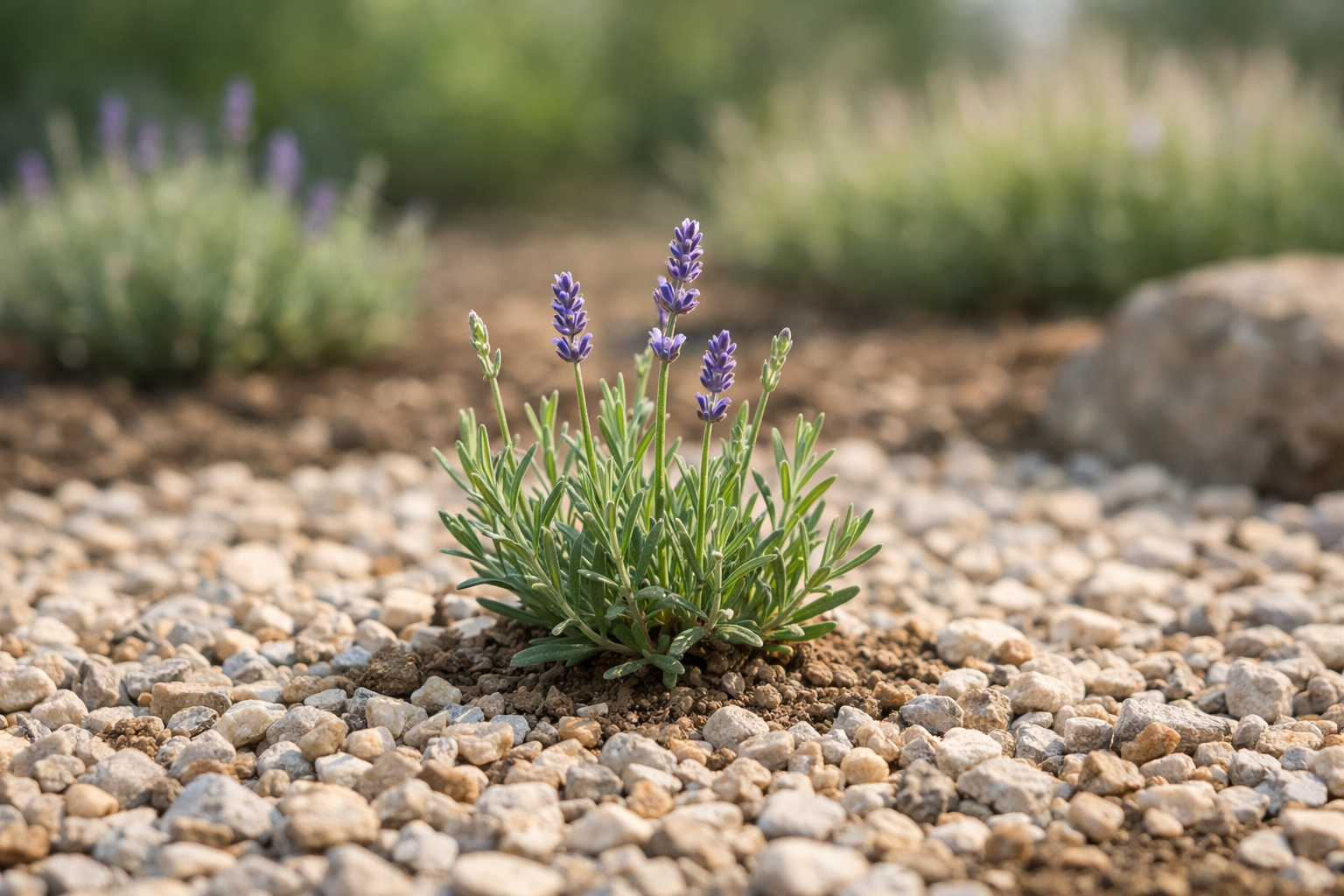
Your first year of lavender won't be dramatic. The plant will be small, maybe 15-20cm tall, and you might get a few flower spikes by late summer.
This is normal. Lavender is a perennial that improves with age. By year two, it'll double in size. By year three, you'll have a magnificent, fragrant bush.
First Year Tips
- Don't harvest heavily — let the plant establish roots
- Cut flower stems in the first year to redirect energy to root growth
- Mulch with gravel (not organic mulch) to reflect heat and prevent moisture retention
- Water once established plants only when the soil is completely dry
Pruning: The Key to Longevity
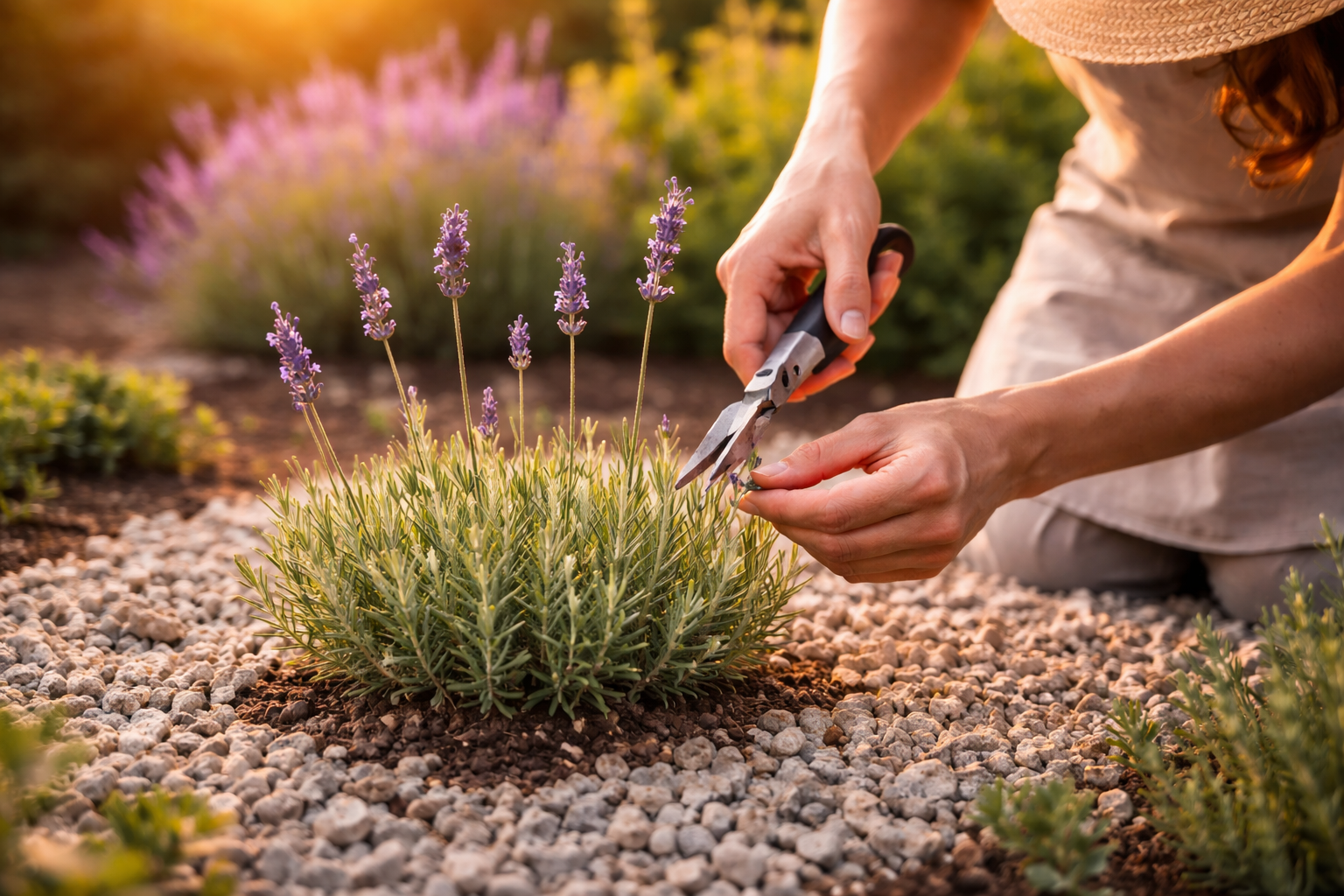
Unpruned lavender becomes woody, leggy, and bare at the centre. Annual pruning is essential.
When to Prune
- After flowering — trim back to just above the lowest leaves
- Early spring — light shaping before new growth begins
How to Prune
- Cut back about one-third of the season's growth
- Shape into a rounded mound
- Never cut into old, bare wood — lavender won't regrow from woody stems
Harvesting and Using Your Lavender
For Fresh Use
Cut stems in the morning after the dew dries. Use in:
- Lemonade and cocktails
- Baking (lavender shortbread, lavender honey)
- Fresh bouquets
For Drying
- Bundle 20-30 stems together with an elastic band
- Hang upside down in a dark, warm, dry place
- After 2-3 weeks, strip the buds from the stems
- Use in sachets, potpourri, or homemade soap
Common Problems
| Problem | Cause | Solution |
|---|---|---|
| Yellowing lower leaves | Overwatering | Reduce watering, improve drainage |
| Leggy, sparse growth | Not enough sun | Move to sunnier spot |
| No flowers | Too much nitrogen | Stop fertilizing, or use only light compost |
| Grey fuzzy mould | Fungal disease from humidity | Improve air circulation, reduce watering |
| Plant dies in winter | Root rot in wet soil | Add drainage, use raised beds |
The Lavender Patience Test
Growing lavender from seed is, fundamentally, a patience test. You'll wait weeks for germination. Months for the first real growth. A full year before the plant shows its true potential.
But when you walk past your garden in midsummer and catch that unmistakable fragrance drifting on warm air — every day of waiting becomes worth it.
Ready to grow? Check out our lavender plant page for quick care facts, or explore more of the Seedora blog.